


Long hours. Constant deadlines. The weight of other people’s problems sitting on your shoulders every single day. It’s no secret that the legal profession is demanding — but what’s spoken about far less often is how many Australian lawyers turn to alcohol or other substances to cope, and how few feel safe enough to ask for help.
If you’re a lawyer, barrister, judge, or law student reading this because you’re worried about your own drinking or drug use — or you’re a family member concerned about someone you love — you’re not alone, and you’re not the only one in the profession dealing with this. This article looks at why addiction shows up so often in the legal world, what the research tells us, and what confidential, practical support actually looks like.
Law is built on a culture of high stakes and high expectations. Billable hours, adversarial court work, client crises that don’t respect business hours, and a professional identity built around always having the answer — all of this creates enormous sustained pressure.

A few factors make lawyers particularly susceptible to substance use problems:
A culture that normalises drinking. After-work drinks, client entertaining, and end-of-trial celebrations are woven into legal culture. What starts as a social norm can quietly become a coping mechanism.
Perfectionism and fear of failure. Many people drawn to law are high achievers who find it hard to accept vulnerability. Admitting to a problem can feel like admitting to weakness in a profession where confidence is currency.
Stigma around mental health. There’s reluctance within the industry to face substance use and mental health issues head-on, partly because people are afraid of what they might find if they look closely. For lawyers, this fear is compounded by very real (though often overstated) concerns about how a substance use issue might affect their practising certificate or reputation. Isolation. Client confidentiality, competitive workplace dynamics, and the sheer volume of work can leave even senior lawyers feeling like they can’t talk to colleagues about what’s really going on.l therapies and stress-management frameworks directly inside your everyday routine, you learn to manage executive triggers in real time.
Protecting your health shouldn’t mean sacrificing your life’s work. Speak directly with a qualified intake coordinator about our private Sydney home programs.
Australian-specific data on lawyers and substance use is still limited — researchers and legal bodies have noted a genuine reluctance within the profession to properly investigate the scale of the problem. But we do have broader national figures that help paint the picture.
According to the Australian Bureau of Statistics‘ National Study of Mental Health and Wellbeing, one in five Australians (21.5%, or roughly 4.3 million people) experienced a 12-month mental disorder, including 3.3% (around 648,000 people) who had a substance use disorder in the 2020–2022 period. When you consider that anxiety and depression are known to be significantly more common among lawyers than the general population, and that alcohol is frequently used as a way of managing that stress, it’s not hard to see why so many legal professionals end up self-medicating rather than seeking proper support.
It’s worth noting that mental health conditions and substance use often feed into each other — someone might drink to take the edge off anxiety, and over time that same drinking can start to trigger or worsen anxiety and low mood. It’s rarely a simple one-way street, and there’s no shame in either side of that equation.
Many lawyers delay getting support because of beliefs that, while understandable, aren’t actually accurate.
“If I get help, my career is over.”
This is one of the biggest fears we hear, and it’s rarely true. Seeking treatment voluntarily and privately is very different from having a substance use issue come to light through a workplace incident or disciplinary matter. Addressing a problem early and confidentially is far more protective of your career than trying to manage it alone until it becomes unmanageable.
“Rehab is only for people who’ve hit rock bottom.”
Treatment isn’t reserved for the most extreme cases. Many people who seek support are still working, still functioning, and still performing well on the surface — but they know something needs to change before it gets worse.
“I don’t have time to stop working for weeks.”
Recovery support isn’t one-size-fits-all. There are options ranging from outpatient counselling you can attend around work commitments, through to residential programs for those who need a more structured reset. A good treatment provider will talk through what fits realistically into your life.“Everyone will find out.”
Confidentiality is a core principle of professional addiction treatment. Reputable services, including Get Help Today, are built around discretion — this is precisely why confidential drug rehab for doctors, lawyers, and other professionals exists as its own category of care.
If you recognise yourself in any of this, here are some steps worth considering:
1. Start with an honest, private conversation. This might be with a GP, a psychologist, or a confidential intake team at a treatment service. You don’t need to have “proof” of a problem — noticing that your drinking or drug use has changed, or that you’re relying on it more than you used to, is reason enough to talk to someone.
2. Ask about assessment before committing to anything. A proper clinical assessment (a conversation with a health professional to understand your situation, health, and needs) helps determine what level of support actually suits you — whether that’s counselling, a structured outpatient program, or a period of residential treatment.
3. Understand what detox involves, if it’s recommended. For some substances, particularly alcohol and certain sedatives, stopping suddenly without medical supervision can be dangerous. Medically supported detox simply means having trained staff manage this process safely and as comfortably as possible.
4. Consider therapy as a genuine tool, not a last resort. Approaches like cognitive behavioural therapy (a practical style of talking therapy that helps you notice and change unhelpful thought patterns) can be particularly useful for high-pressure professionals, because it gives you concrete strategies for managing stress without turning to substances.
5. Plan for aftercare, not just the initial treatment. Ongoing support — whether that’s regular counselling, peer support groups, or simply a structured check-in plan — makes a real difference in maintaining the progress made during initial treatment.
6. If you’re worried about a colleague or loved one, approach the conversation with curiosity rather than accusation. Something as simple as “I’ve noticed you seem really under the pump lately, how are you actually going?” can open a door that a lawyer might not open on their own.
If you’re supporting a partner, parent, or sibling who works in law, it’s easy to feel helpless watching someone you love struggle while insisting everything is fine. You’re allowed to raise concerns. You’re allowed to encourage them to seek help. And you’re allowed to look after your own wellbeing throughout the process — support services aren’t only for the person using substances; many offer guidance for family members too.
The legal profession is unlikely to change its high-pressure culture overnight, but individual lawyers can absolutely change how they respond to that pressure — and that starts with recognising that struggling isn’t a character flaw. Confidential, professional support exists specifically because services like Get Help Today understand the particular concerns lawyers carry around privacy, reputation, and career impact.
If you’re a legal professional, or you love one, reaching out for a confidential conversation is a reasonable, responsible step — not a last resort. Getting help today, before things become a crisis, is one of the most protective decisions a busy professional can make for both their career and their wellbeing.
Contact Get Help Global and start your addiction rehab for Lawyer recovery journey with compassion, structure, and proven support. For a free consultation contact our founder Ruben Mas direct on 0426794453.

Why So Many Australian Legal Professionals Suffer in Silence Long hours. Constant deadlines. The weight of other people’s problems sitting on your shoulders every single day. It’s no secret that the legal profession is demanding — but what’s spoken about far less often is how many Australian lawyers turn to alcohol or other substances to…

Discreet Home-Based Addiction & Burnout Treatment for Professionals For high-performing executives, business owners, and professionals across Sydney, the pressure to maintain peak performance can be a double-edged sword. Often, the very traits that drive remarkable professional success—relentless work ethic, high stress tolerance, and an inability to say “no”—are the ones that mask severe burnout and…
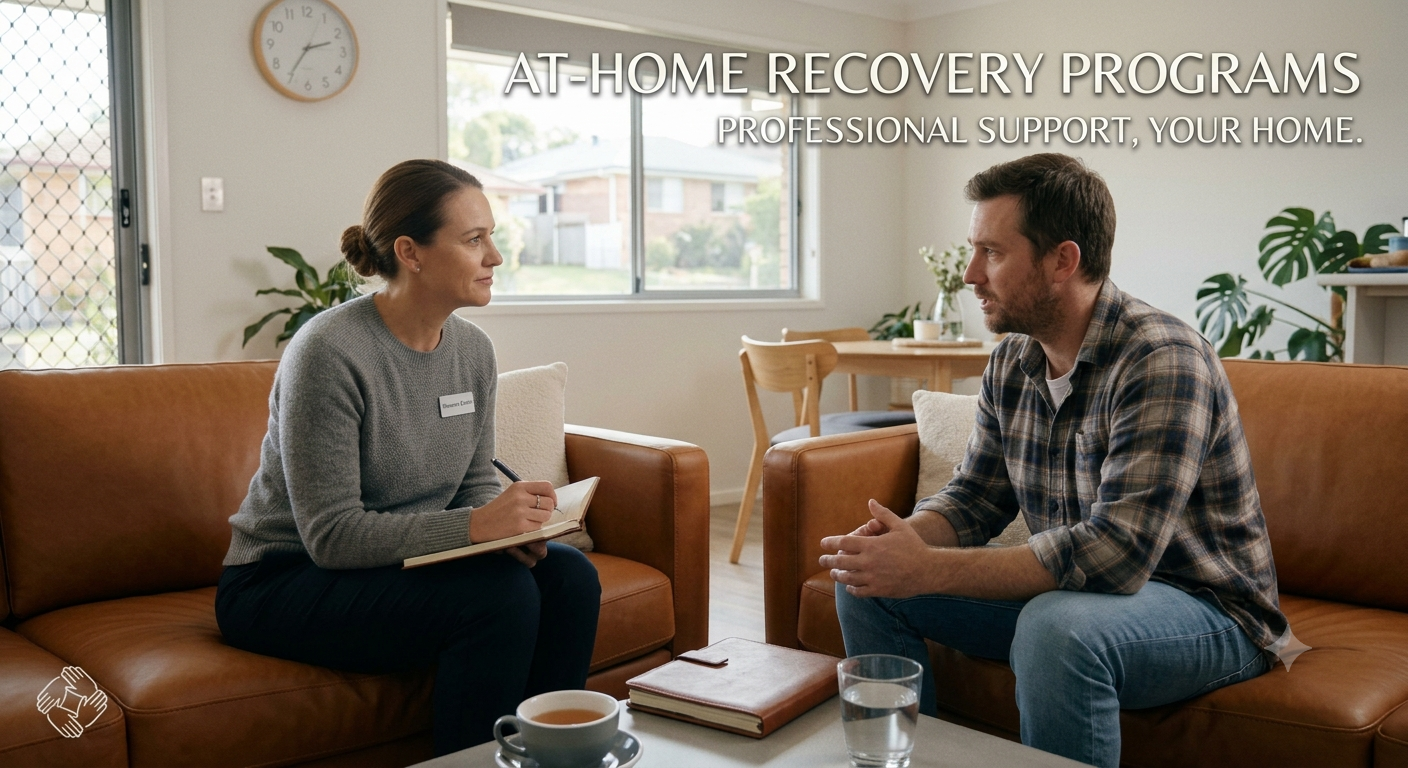
Reclaim your life with expert help from the comfort of your home When steps toward recovery feel incredibly heavy, the hardest part is often just getting through the front door of a clinic. For many people across Sydney, traditional residential rehab isn’t an option because of work commitments, family responsibilities, or a need for complete…

Learn how nutrition supports addiction recovery alongside counselling, emotional support, and our rehabilitation programs.

Learn how addiction impacts criminal charges, family law, and employment. Explore support options and start your recovery today.

Choosing a path for alcohol addiction treatment Sydney usually happens at a crisis point. Get Help Global provides a clinical, high-end intervention and plan to recover, before the damage becomes irreversible.
Our Partners